
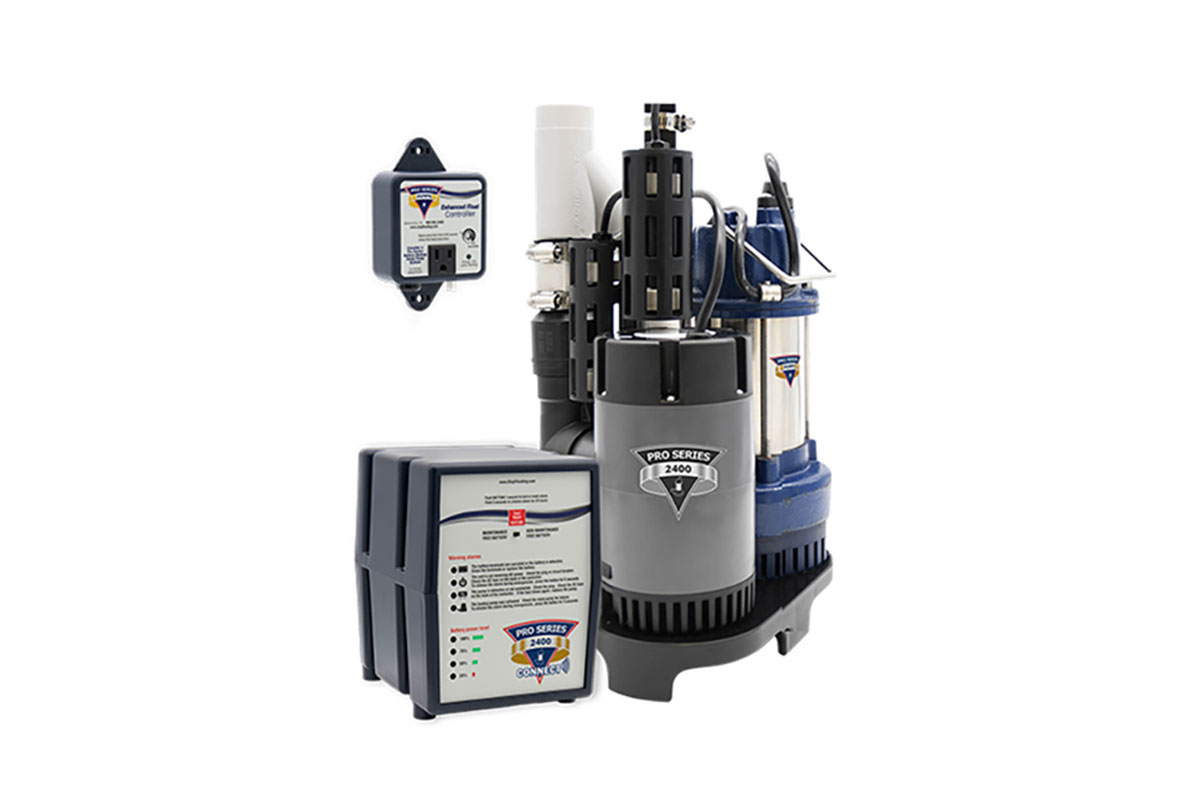
A sump pump backup is a second pump that takes over when your main pump cannot keep up or loses power, and around here it is the difference between a dry basement and a ruined one. The reason it matters comes down to timing. The same summer thunderstorm that fills your sump pit is usually the storm that knocks out your power, and a standard sump pump runs on house current. When the power goes, so does the pump, at the exact moment you need it most.
A backup runs on either a battery or your home’s water pressure, so it keeps moving water through an outage. If you have a finished basement, a backup pump plus a little regular testing is the most reliable way to keep the water where it belongs, instead of in your carpet.
Key Takeaways
- The storm that floods your basement is usually the one that cuts your power, and a standard sump pump runs on house current.
- A backup pump keeps working through an outage, on either a battery or your home’s water pressure.
- Battery backups are simple and work in any home, but their run time shrinks as the battery ages, so plan to replace it.
- Water-powered backups can run as long as your water pressure holds, but they only work on city water, not a private well.
- Most sump pumps last about 7 to 10 years, and the float switch is the part most likely to quit, so test the system before storm season.
Why do sump pumps fail right when you need them?
A summer storm in Northwest Iowa does two things at once. It dumps water faster than the ground can take it, and it knocks the power out. Those two events love to arrive together, which is the whole problem. A sump pump that runs only on house current is a flashlight that works great until you unplug it, and the storm just unplugged it. The pit fills, the pump sits there dead, and the water has nowhere to go but up and out across your basement floor.
Power loss is not the only way these systems quit, though. The float switch, the part that senses the water rising and tells the pump to turn on, is the piece most likely to fail. Farm Bureau notes that a stuck float is the most common sump pump failure, which is why many manufacturers suggest replacing the float every couple of years. Add a clogged discharge line, a jammed check valve, or a tired motor on a pump that is past its prime, and you have plenty of ways for a basement to flood without the power ever going out.
Here is the part that makes it expensive. Most of the time nobody is home when it happens. You are at work on a Tuesday, the storm rolls through, and you walk downstairs that evening to soaked carpet, swollen baseboards, a ruined couch, and the boxes you were storing down there. A finished basement is a lot of money sitting in the lowest, wettest part of the house.
Some homes around here carry more of that risk than others. Close to the lakes the water table sits high, so the pit fills faster and the pump works harder every time it rains, and a failure floods the basement that much quicker. If your place is a weekend or seasonal home on Okoboji or Spirit Lake, the math gets worse still. A pump can quit on a Thursday and sit in a rising pit until you drive up on Saturday. That is the argument for both a solid backup and an alarm, and it is part of what Lake Home Service is for: keeping an eye on the place while you are three hours away.
What does a backup sump pump actually do?
This guide assumes you already have a sump pump, or know your basement needs one. If you are still deciding whether your home needs a pump at all, that is a separate question worth reading first. From here, the goal is making sure the pump you have actually runs when the storm comes.
A backup is a second pump that sits in the same pit as your primary, with its float set a little higher. As long as the main pump is keeping up, the backup never moves. The moment the primary loses power, jams, or simply cannot pump fast enough, the water rises past that higher float and the backup kicks on by itself. You do not have to be home, and you do not have to flip a switch. That independence is the point: a backup runs on its own power source, separate from the house current that the storm just took down.
Battery backup vs water-powered backup: which fits your home?
There are two real options, and the right one depends on your house.
A battery backup is a second pump wired to a battery and a charger. When the power drops or the primary fails, it switches over automatically. A fresh battery will typically run the pump for several hours of actual pumping, often around seven to eight hours according to Zoeller, though that depends on how hard and how often it has to cycle. The honest catch is that batteries fade. The same backup that ran eight hours when it was new will run noticeably less after a few years, so a battery backup is not something you install and forget. You replace the battery on a schedule. The upside is that it works in any home, on any water source, which matters a lot out here.
A water-powered backup uses no battery and no electricity at all. It runs your home’s municipal water pressure through a narrow nozzle to create suction, and that suction pulls water out of the pit. As long as the city water keeps flowing, it keeps pumping, so there is no run-time limit to worry about and no battery to maintain. The tradeoffs are real, though. It uses municipal water to do the work, which shows up on your water bill, and it needs a backflow preventer and usually a permit and a licensed plumber to install correctly.
And here is the one that matters most in this area: a water-powered backup only works if you are on city water. If your place is out on an acreage on a private well, like a good share of homes around Dickinson County, a water-powered backup is off the table. Your well pump needs the same electricity that just went out, so there is no pressurized water to drive it during an outage. For well homes, a battery backup, or a battery backup paired with a generator, is the way to go. I will say it plainly: for most homes, the battery backup is the simpler, more dependable choice. Water-powered makes the most sense on city water in a spot where outages tend to run long.
How do you keep your sump system working?
A backup only helps if the whole system actually runs when it is asked to, and that takes a few minutes a couple of times a year. None of this is complicated.
- Test it before storm season, then again midsummer. Pour a five-gallon bucket of water into the pit and watch. The pump should kick on quickly, move the water, and shut off. If it is slow, noisy, or does not start, deal with it now and not during a downpour.
- Keep the pit clean. Clear out debris and gravel so the float can move freely, and rinse the intake screen. A stuck float is the most common failure, and it is usually just gunk. One local wrinkle: a lot of wells in this area run high in iron, and that iron leaves a reddish-orange sludge that coats the pit and the float faster than any manual assumes. If your pit runs orange, clean it more often than the once-a-year advice you find online.
- Check the discharge and the check valve. Make sure the line carries water well away from the foundation and is not kinked or clogged, and that the check valve is not letting water run back into the pit. On the flat lots common around here, the discharge has to get the water out far enough that it does not just soak back down to the foundation and into the pit you only just emptied.
- Watch the age. Most sump pumps last about 7 to 10 years. If yours is older and starting to cycle oddly or sound rough, plan the replacement before it picks the worst possible night to quit.
- Add an alarm. A simple water alarm, or a connected sensor like LeakSmart, will tell you the pit is rising even when you are at work or up at the lake. It is cheap insurance against a problem you cannot see.
How Comfortec helps
Comfortec Heating, Cooling & Plumbing has been keeping Iowa Great Lakes basements dry since 2004, and our plumbing crew installs and services primary and backup sump systems, including PHCC Pro Series sump pumps with battery backup. We will look at your pit, your discharge, and how your home is powered, then tell you straight which setup makes sense, a battery backup, a water-powered unit if you are on city water, or a primary that is simply due for replacement. Our technicians use drop cloths and shoe covers so your home is left as clean as we found it, and we answer the phone around the clock, because a pump that quits in a storm does not wait for business hours. If you already have water coming in, schedule a service call right away.
Frequently Asked Questions
How long does a battery backup sump pump run during an outage?
A fresh battery usually powers several hours of actual pumping, often in the range of seven to eight hours, but it depends on how often the pump has to cycle. Run time drops as the battery ages, so a backup that lasted all night when it was new may give you far less after a few years. Replacing the battery on a schedule is part of owning one.
Do I need a backup if I already have a good sump pump?
If you have a finished basement or store anything of value down there, yes. Even a brand new, perfectly sized primary pump is helpless when the power goes out, and that is precisely when storms hit. A backup covers the two things your main pump cannot handle on its own: a power outage and a mechanical failure.
Can I use a water-powered backup on a private well?
No. A water-powered backup needs pressurized municipal water to operate, and a private well relies on an electric pump for its pressure. During the outage when you would need the backup, the well has no power and no pressure either. For homes on a well, a battery backup, often paired with a generator, is the right answer.
How often should I test my sump pump?
At least twice during the wet months: once before storm season and once around midsummer. Pour a bucket of water into the pit to confirm the pump starts, drains, and shuts off, clear any debris so the float moves freely, and replace the float on the schedule your pump’s manufacturer recommends.
Not sure whether your basement is actually protected, or whether your pump is on its last legs? That is a good thing to find out on a calm day rather than during the next storm. Request a quote from Comfortec for a primary or backup sump system, or call the 24-hour line if water is coming in right now.