
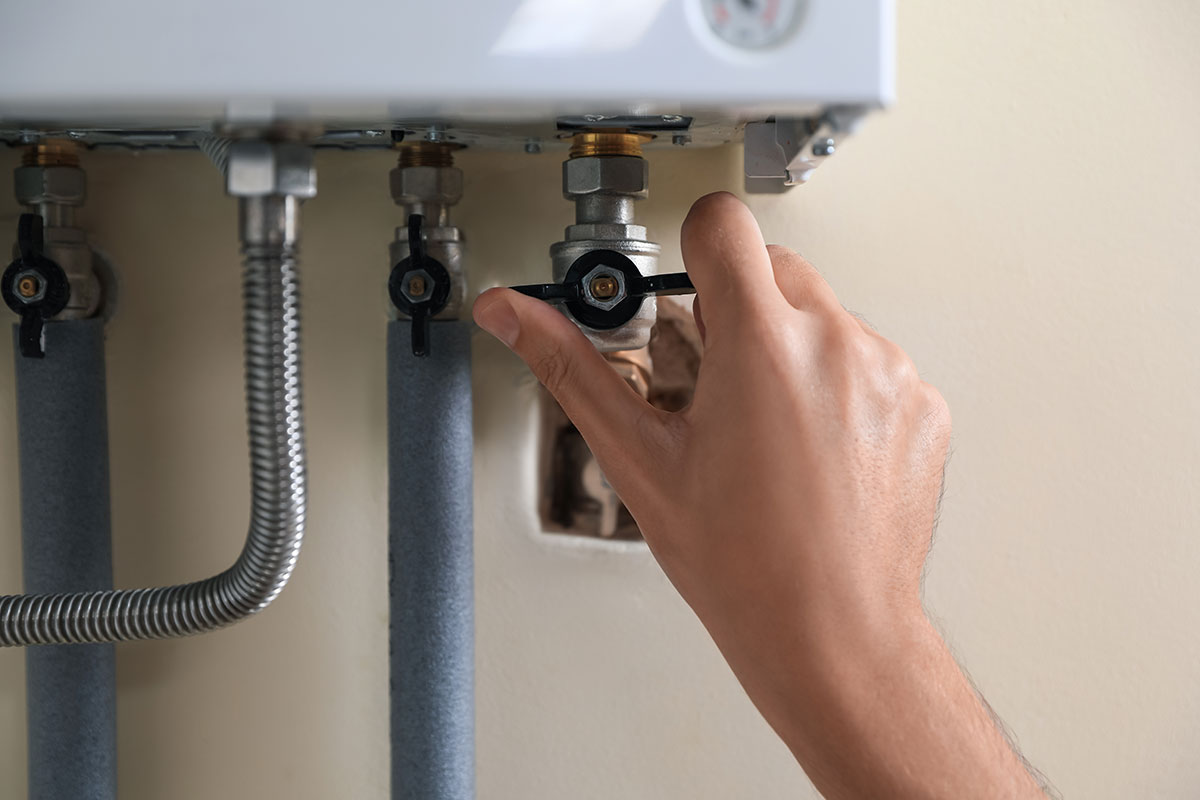
For most Northwest Iowa homes, the tankless vs. tank water heater decision comes down to how you use hot water and how long you plan to stay in the house. A tank water heater costs less up front, feeds several fixtures at once, and is the simpler swap when the old one quits. A tankless unit costs more to install, but it heats water only when you call for it, runs 24 to 34 percent more efficiently in homes that use 41 gallons of hot water or less per day according to the U.S. Department of Energy, and typically lasts about 20 years, roughly double a tank. If your family regularly drains the tank, or you expect to be in the house past the next decade, tankless usually earns its price. If the budget is tight or the old heater just failed, a quality tank is still a sound choice.
Key Takeaways
- Tank water heaters cost less up front and handle simultaneous demand better; tankless units cost more but heat water only on demand.
- The U.S. Department of Energy puts tankless efficiency gains at 24 to 34 percent for lower-use homes, and 8 to 14 percent for heavy-use homes.
- A tankless unit typically lasts about 20 years, roughly twice the life of a storage tank.
- Northwest Iowa’s cold incoming water and hard wells both affect sizing and maintenance, so local conditions should drive the choice.
- The right answer depends on your household’s hot water habits, not on which technology is newer.
Here is where this decision usually gets made: the water heater is 12 years old, there is a rust ring spreading on the basement floor, and the shower upstairs went lukewarm halfway through. Nine times out of ten it is also a weekend, because that is how these things go. Standing in a wet basement is the worst moment to hear a sales pitch and the best moment to already know what you want. So let’s walk through it now, while yours is still working.
How does a tank water heater work, and why do most homes still have one?
A storage tank water heater is exactly what it sounds like: an insulated tank, usually 40 to 50 gallons in the homes we work in, that heats water with a gas burner or electric elements and holds it at temperature until you need it. Cold water feeds in at the bottom through a dip tube, hot water leaves from the top, and the burner cycles to keep the tank at its setpoint around the clock.
That around-the-clock part is the trade-off. Keeping 50 gallons hot at 2 a.m. while everyone sleeps wastes energy through what the trade calls standby heat loss. The Department of Energy’s guidance on storage water heaters is blunt about it: energy leaks out of the tank even when no tap is running. Modern tanks insulate far better than the one your parents had, but physics still collects its toll.
What a tank does well is volume all at once. Two showers, a dishwasher, and a load of laundry can all pull from the same 50 gallons without anyone noticing, right up until the tank runs dry. For a busy household, that buffer is worth something real.
How does a tankless water heater work?
A tankless unit, also called an on-demand water heater, skips the storage entirely. When you open a hot tap, water flows through a heat exchanger the size of a carry-on suitcase mounted on the wall, a gas burner fires, and the water heats on its way to the faucet. Close the tap and the burner shuts off. Nothing sits around staying hot for nobody.
A tank is a pot of coffee kept warm on the burner all night so you can pour a cup at seven. A tankless unit brews the cup when you reach for it. That is the whole efficiency argument in one picture: you stop paying to keep water hot that nobody is using. Per the Department of Energy, homes using 41 gallons or less of hot water daily see 24 to 34 percent better energy efficiency from a tankless unit, and even heavy-use homes around 86 gallons a day still gain 8 to 14 percent. ENERGY STAR figures a certified gas tankless model saves a family of four about $95 a year on gas bills compared to a standard gas tank.
The catch is flow rate. A tankless unit delivers hot water continuously, but only so much of it at once, typically 2 to 5 gallons per minute depending on the model. It will never run out the way a tank does, but ask it to feed two showers and the washing machine at the same time and an undersized unit will let you know. Sizing the unit to your household’s real peak demand is the whole job, and it is where a rushed install goes wrong.
One more thing that matters here specifically: incoming water in Northwest Iowa is cold. A deep well holds right around 50 degrees all year, and shallow and municipal lines can run colder than that by late winter. The colder the water coming in, the harder a tankless unit works to hit 120 degrees, and the lower its usable flow rate. A unit sized off a warm-climate spec sheet can come up short in Milford in January. This is a sizing problem, not a technology problem, but it has to be accounted for.
What do tank and tankless water heaters cost?
Using national figures rather than anyone’s local price sheet: Angi’s 2026 cost data puts a tank-style water heater replacement at roughly $882 to $1,825 installed, while a tankless installation runs about $1,400 to $3,900. Treat those as general ranges, not a quote. Your actual number depends on the unit and the fuel, and just as much on what your existing venting, plumbing, and gas line look like.
The gap between the two is widest when you are converting from a tank to tankless for the first time. A tankless unit often needs a larger gas line, new venting, and a different mounting location, and that first-time plumbing work is a real cost. The second tankless install in the same spot, 20 years later, is much simpler.
So the honest math is not “which sticker price is lower.” It is upfront cost against operating savings and lifespan. A tankless unit that outlives two tanks and shaves the gas bill every month can win on total cost even with the bigger first check. Whether it wins in your house depends on your usage, which is exactly what a good installer should work through with you before quoting anything. If you want a real number for your home instead of a national range, request a quote and we will size it properly.
Which lasts longer, and what does maintenance look like on well water?
Lifespan is the quiet advantage of tankless. ENERGY STAR puts the life expectancy of a demand water heater at about 20 years, while storage tanks generally give you 10 to 15. A tank fails the way that rust ring on the basement floor suggests: the tank itself corrodes from the inside until it weeps, then leaks. There is no fixing a rotted tank. A tankless unit has no tank to rot, and most of its parts can be serviced or replaced individually.
But around here, the maintenance conversation has to include water quality. A lot of homes outside town in Dickinson, Clay, and Emmet counties run on private wells, and much of that water is hard, often loaded with iron besides. Hard water is measured in grains per gallon, and every grain of it wants to become scale inside your water heater. In a tank, scale settles as sediment you can flush. In a tankless unit, scale coats the heat exchanger, which is the heart of the machine, choking efficiency and shortening its life.
Every tankless line we install, Rinnai, Navien, and Rheem/Ruud alike, calls for periodic descaling flushes, and on hard well water that is not optional. The better answer is to fix the water first: a properly sized softener takes the scale problem off the table for the tankless unit and every other appliance in the house at the same time. We install Water-Right treatment systems for exactly this reason, and on well water we usually recommend having the water tested before choosing a water heater at all. A tankless unit on untreated 25-grain water is a 20-year machine set up for a 10-year life.
Which water heater is right for your home?
After two decades of putting both kinds into Iowa Great Lakes homes, here is how I would frame the decision at your kitchen table.
A tank still makes sense if the upfront budget is the deciding factor, if your current heater just failed and you need hot water tomorrow, or if your household routinely runs multiple heavy draws at once and you would rather buy capacity as gallons in a tank than as flow rate in a bigger tankless unit. There is no shame in a good 50-gallon tank. It is proven technology that costs less to put in. Simple has its own value.
Tankless earns its price if you plan to stay in the home ten years or more, if you are tired of the third shower going cold, if floor space matters, or if you are building new or remodeling and can run the gas line and venting right the first time. New construction is the cheapest moment a tankless install will ever have.
Lake homes deserve their own sentence. For a seasonal place on West Okoboji or East Okoboji that sits empty half the year, a tank spends months keeping water hot for an empty house, which is pure waste, and a failed tank in an unoccupied home can leak for weeks before anyone notices. A tankless unit avoids both problems, though it still needs proper winterizing, since a heat exchanger holds water and will freeze like anything else. That is part of what we handle through Lake Home Service closings every fall.
Who installs tank and tankless water heaters in the Iowa Great Lakes area?
Comfortec Heating, Cooling & Plumbing has been installing and servicing water heaters from our shop in Spirit Lake since 2004, in town and on rural well water across Northwest Iowa. We install Rinnai, Navien, and Rheem/Ruud in both tank and tankless configurations, service any brand, and back the work with a Lifetime written Workmanship Guarantee. Our plumbing team sizes the unit to your household and your water, not to whatever is on the truck, and if the old heater quits on a Saturday night, we run 24-hour service because water heaters do not check the calendar.
Frequently Asked Questions
Will a tankless water heater work with well water?
Yes, but the water quality decides how well. Hard or iron-rich well water scales up the heat exchanger and shortens the unit’s life, so have the water tested first. In most cases a softener ahead of the tankless unit solves the problem and protects the rest of your plumbing too.
Can a tankless water heater keep up with two showers at once?
A properly sized one can. Whole-house tankless units deliver roughly 2 to 5 gallons per minute, and colder incoming water reduces that output. The fix is sizing the unit to your real peak demand with cold Iowa inlet water in mind, not the number on a warm-climate spec sheet.
How long does it take for a tankless water heater to pay for itself?
Usually years, not months, and the honest lever is lifespan more than the monthly bill. The gas savings are real but modest; the bigger win is that one tankless unit can outlast two tanks. My rule of thumb: if you will be in the house past the ten-year mark, the math tends to favor tankless. If you are selling in a few years, buy the tank.
Do tankless water heaters freeze in winter?
They can. Most units have built-in freeze protection that works while the unit has power, but that does not cover a seasonal home that is shut down and unpowered. A lake home tankless unit needs to be drained and winterized properly as part of closing the house each fall.
Not sure which way to go?
The right water heater is the one matched to how your household actually uses hot water, and to the water itself. If yours is past age ten, do not wait for the rust ring. Call Comfortec at (712) 336-5431, schedule a service call, or request a quote and we will talk through both options honestly, including the one that costs you less.