
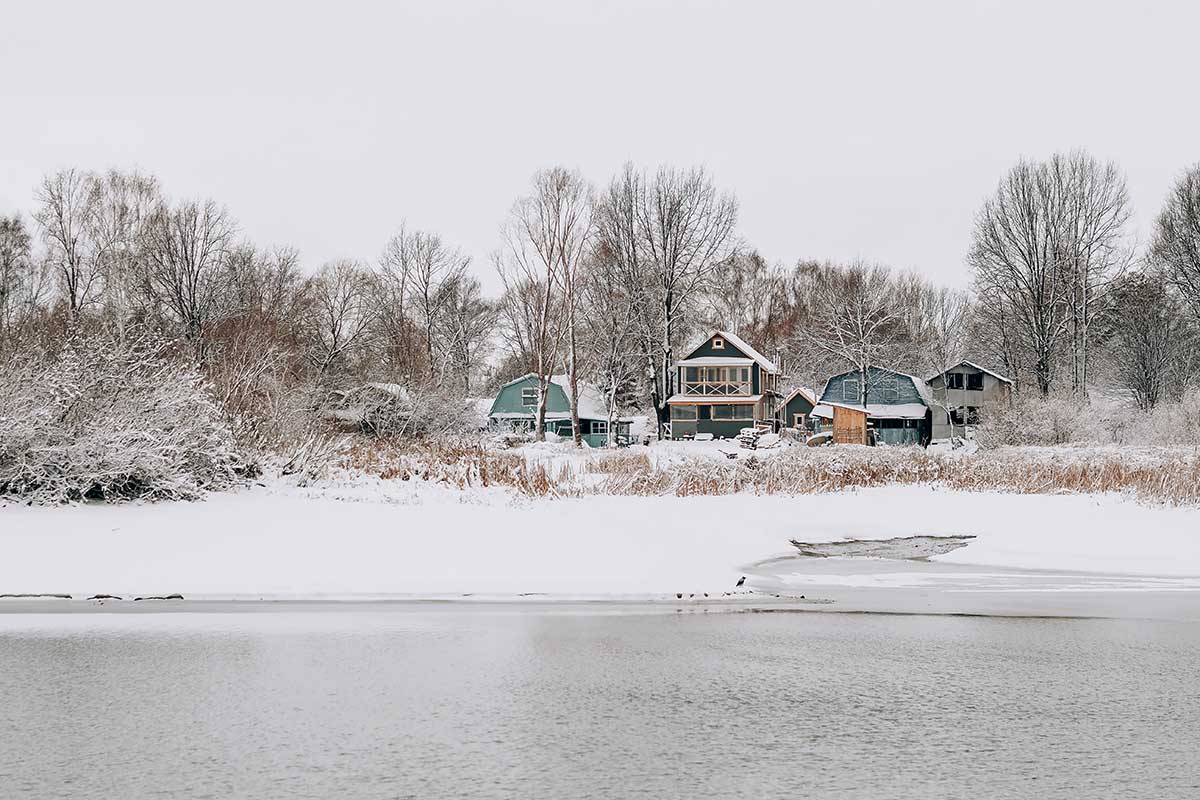
A lake home in the Iowa Great Lakes can be closed two ways. Heat it all winter, or take the water out. Pick one and do it completely. The houses that get wrecked are the ones stuck in between. If you heat it, keep the thermostat at 55 or higher, leave power and gas on, and set up a low temperature alert. If you drain it, shut the main, drain the lines and the water heater, put antifreeze in every trap, and take care of the softener. Do it before the first hard freeze. Around here that average lands near September 30, but it can hit as early as September 3. That eight week spread is the whole problem. You cannot plan around an average. You can only get ahead of it.
Key Takeaways
- Pick one strategy and commit to it. Full heat all winter, or a fully drained house. Nothing in between.
- The first fall freeze can land anywhere from early September to late October. September is the month to call. October is triage.
- A tankless unit’s freeze protection only works while it has both power and gas. Shut the breaker and it is gone.
- Half-drained and unheated is the worst combination. We find it more than anything else.
- An alert means nothing without a plan behind it. Somebody local needs a key.
When should you close your lake home?
Earlier than most people do. The National Weather Service office that covers this corner of Iowa puts the average first fall freeze at September 30 at its Sioux Falls climate site. Earliest on record, September 3. Latest, the last week of October. Eight weeks. You cannot build a plan around that.
The other reason to move early is that every plumbing and heating shop on the lakes is closing houses in the same four week window. The calendar fills. If you want a specific week, ask for it in September. The last two weeks of October are when we are pulling people off the ground because a pipe already burst somewhere else.
I hear the same thing every fall. It was 72 and sunny last weekend. The boat is still in. Nobody wants to shut the place down yet. Fair enough. You do not have to stop using the house to protect it. Get the water system handled, keep the heat on for the weekends you are still coming up. What you do not want is the November Saturday where you finally get around to it and the forecast has already run 18 for two nights.
Should you heat it or drain it?
This is the actual decision. Everything else follows from it.
Keep it heated if you are going to use the place in winter, the heating system is in good shape, and somebody can get there within a few hours if something goes sideways. Leave the thermostat at 55 or higher. That is the number the American Red Cross recommends for a home left empty in cold weather. Do not set it back at night. Do not creep it down to 45 to save a few dollars. The gas you save is nothing next to what a burst supply line costs in water damage and a dry-out crew.
Drain it if nobody is coming back until April. A house with no water in it cannot flood. Simple as that.
Here is the honest part. Draining is more work in the fall and more work in the spring. You pay for both trips. Heating an empty house all winter costs real money in gas or electricity. And it leans on the power staying on. The failure mode people underestimate is a January ice storm that takes the power out for two days. Your furnace is off. Your tankless unit’s freeze protection is off. The house cools toward outdoor temperature while you are three hours away watching it on an app and cursing the phone.
My take, after enough Aprils: if nobody is sleeping in the house between Thanksgiving and ice-out, drain it. If you are coming up for a weekend in January, heat it and monitor it properly. Pick one. The houses that give us trouble are the ones where somebody shut the water at the main but never drained the lines. Or drained the fixtures but forgot the water heater. And then turned the heat off too. Half-drained and unheated. Worst of both worlds, and it is the one we find most often.
How do you drain the water system?
Order matters. And so does the list of things people forget.
- Shut off the water at the main. On a well system, kill the breaker to the pump first, then drain the pressure tank. On city water, close the main valve inside and know where the curb stop is.
- Open everything, top down. Every faucet, hot and cold, starting with the highest fixture in the house and working down. Open the low point drains. Open any drain valves on the supply piping. Leave the faucets open all winter.
- Blow the lines out if you can. Compressed air clears the water that gravity leaves behind in horizontal runs. That is where most winter splits happen. Use low pressure. Shop air at full tilt will take out fixture cartridges and seals, and it can damage the very fittings you are trying to protect.
- Antifreeze in every trap. Pour non-toxic propylene glycol antifreeze, the kind sold for RVs and boats, into every sink, shower, tub, floor drain, and laundry tub. Never use automotive antifreeze, which is poisonous and not intended for potable water systems. Flush the toilets. Sponge out the tank and the bowl. Leave antifreeze in both.
- Do not skip the appliances. The dishwasher and the washing machine both hold water in their pumps and hoses. Run antifreeze through them per the manufacturer’s instructions. Disconnect and drain the ice maker line. That one line behind the refrigerator has ruined more kitchen floors than any pipe in the basement.
- Handle the softener. A softener left full of water in an unheated house will crack a valve body or a tank. You find out in May. Bypass it and drain it per the manufacturer’s directions. If yours sits on hard well water out on an acreage, this is not the year to skip it.
- Outside first, actually. Hose bibs, frost-free hydrants, the sprinkler system, the boat lift wash-down line. All of it comes before anything inside. Pull the hoses off. A hose left connected to a frost-free hydrant defeats the hydrant entirely. It cannot drain back.
Then walk the house one more time with the list in your hand. The fixture that gets missed is almost always in the basement bathroom, the bunk room, or the shop. The one nobody thought about because it is three floors up or two doors in.
What about the water heater?
Two very different answers depending on what you have. If you are not sure which makes sense for your place long term, we walked through tank versus tankless for an Iowa home earlier this summer.
Tank units. Shut off the gas or the power first, then the cold supply, then drain the tank with a hose to a floor drain or outside. Order is not optional. Firing a dry tank will destroy an element or scorch a burner assembly in short order. Open a hot faucet upstairs so the tank will actually drain instead of holding vacuum.
Tankless units. This is where good intentions cause damage. Tankless water heaters have built-in freeze protection, and it is genuinely good. Rinnai rates indoor models down to -22 degrees and outdoor models down to -4, but only while the unit has both power and gas. Navien says the same thing, and adds that if power is lost during a freeze you need to drain the unit.
Read that again. The single most common mistake we see at lake homes. Somebody closes the house, kills the main breaker on the way out the door, and assumes the tankless unit is fine because the brochure said it has freeze protection. It had freeze protection. Then the breaker went off. Now there is a heat exchanger full of water hanging on an exterior wall in February. Heat exchangers are not a cheap part.
So. If the house stays powered and heated, leave the tankless unit powered and gassed. If the house is being drained or the power is coming off, drain the unit too. Isolation valves make it a ten minute job. If your unit sits on an exterior wall or in an unheated space, a drain-down kit is worth asking about. It dumps the water automatically when power is lost.
What about the furnace, the sump pump, and the power?
If you are heating the house through the winter, the furnace is now a piece of safety equipment. Not a comfort appliance. Put a fresh filter in and get it serviced before you leave, not in December when you notice it running rough over the app. A furnace that quits in an occupied house is an inconvenience. A furnace that quits in an empty one is a plumbing bill.
One local detail worth knowing if you have a high efficiency furnace. The intake and exhaust terminations are the PVC pipes coming out of your sidewall, usually a foot or two above grade. Blowing and drifting snow plugs them. The pressure switch does its job. The furnace locks out. Same thing happens when ice builds off the roofline above them. If someone is checking on the house, that is one of the two things to look at.
The other is the sump. Pits still fill in winter, especially during a January thaw. A pump that fails while nobody is in the house runs unnoticed until the water finds the finished part of the basement. Test it before you leave. Fill the pit with a bucket. If the house sits low or near the shoreline, a battery or water-powered backup matters more at a seasonal home than it does at your primary residence. There is nobody there to hear the alarm. We install Pro Series pumps with battery backup for exactly this situation.
If the house stays heated, leave the power and the gas on. All of it. Do not pull the main breaker. Put fresh batteries in the smoke and carbon monoxide detectors. A gas appliance is going to run unattended for five months. That is not a thing you check in November and forget about.
How do you keep an eye on it all winter?
A connected thermostat is the cheapest insurance on this list. Honeywell Home thermostats will email or push an alert when the indoor temperature drops below a threshold you set. Set that threshold at 45, not 35. You want a warning while there is still time to do something. Not a notification that the house is already at the freezing point and the pipes are about to split.
Automatic water shutoff is the other one. A LeakSmart valve closes the main when a sensor gets wet. Turns a catastrophe into a mess. Put sensors under the water heater, behind the washer, under the kitchen sink, near the softener.
Now the part nobody likes to hear. An alert is only as good as the plan behind it. A low temperature warning at 2 a.m. does nothing for you in Omaha or Des Moines unless somebody near the lake has a key and knows what to do with it. Arrange that in October. Not the night it happens. Give a neighbor a key. Or set it up with whoever services the house. Make sure they know where your main shutoff is.
If you would rather hand the whole thing off, that is what the Lake Home Service at Comfortec Heating, Cooling & Plumbing is for. When we close a property we set the thermostat, run a seasonal inspection of the heating and cooling equipment, check the water heater, deal with the softener, inspect the water and sump pumps, check the fixtures and the appliances, shut the water down and check it for leaks. You provide a key and make sure the utilities are on before we get there. We collect at the time of service. Comfortec has been doing this on these lakes since 2004. The crews use shoe covers and drop cloths. You are not coming back in May to somebody else’s boot prints in your foyer.
Frequently Asked Questions
When should I close my lake home in the Iowa Great Lakes?
Aim to have it done by early October. At the nearest long-term climate site the average first fall freeze falls on September 30. It has arrived as early as September 3. Schedule in September if you want a specific week. The last two weeks of October fill up fast at every shop on the lakes.
Is it better to drain the pipes or leave the heat on?
If nobody is using the house until spring, drain it. A house with no water in it cannot flood, no matter what the power does. If you are coming up in winter, keep it heated at 55 degrees or above with remote monitoring and a local contact who has a key. What you want to avoid is the middle ground. Water partly drained, heat off. That is the one that wrecks houses.
Will my tankless water heater freeze if I shut off the power?
It can. Tankless freeze protection is electric. It only works while the unit has both power and gas. Cutting the breaker on your way out the door turns it off. If the house is losing power or being drained, drain the water heater too. Or ask about a drain-down kit that does it automatically during an outage.
Do I really need to drain the water softener?
Yes, if the house will not be heated. Softeners hold several gallons of water in the valve and the resin tank. That water freezes and cracks components like anything else. Bypass and drain it per the manufacturer’s instructions when you drain the rest of the system.
What temperature should I leave the thermostat at?
No lower than 55 degrees for an unoccupied house. Held at the same setting day and night rather than set back overnight. Colder settings save very little and leave less margin when a cold snap hits or the furnace has a problem.
One last thing
Closing a lake home properly takes an afternoon. Opening one that froze takes a contractor, a dry-out company, and an insurance adjuster. It eats a chunk of the summer you bought the place for. Nothing here removes every risk. But doing it in the right order and before the first hard freeze removes most of it.
If you would like it handled, schedule your lake home closing or call the Spirit Lake office at 712-336-5431. If something is already going wrong, we run 24 hour service at 888-362-2106. For anything on the plumbing side, we can look at it while we are out there.