
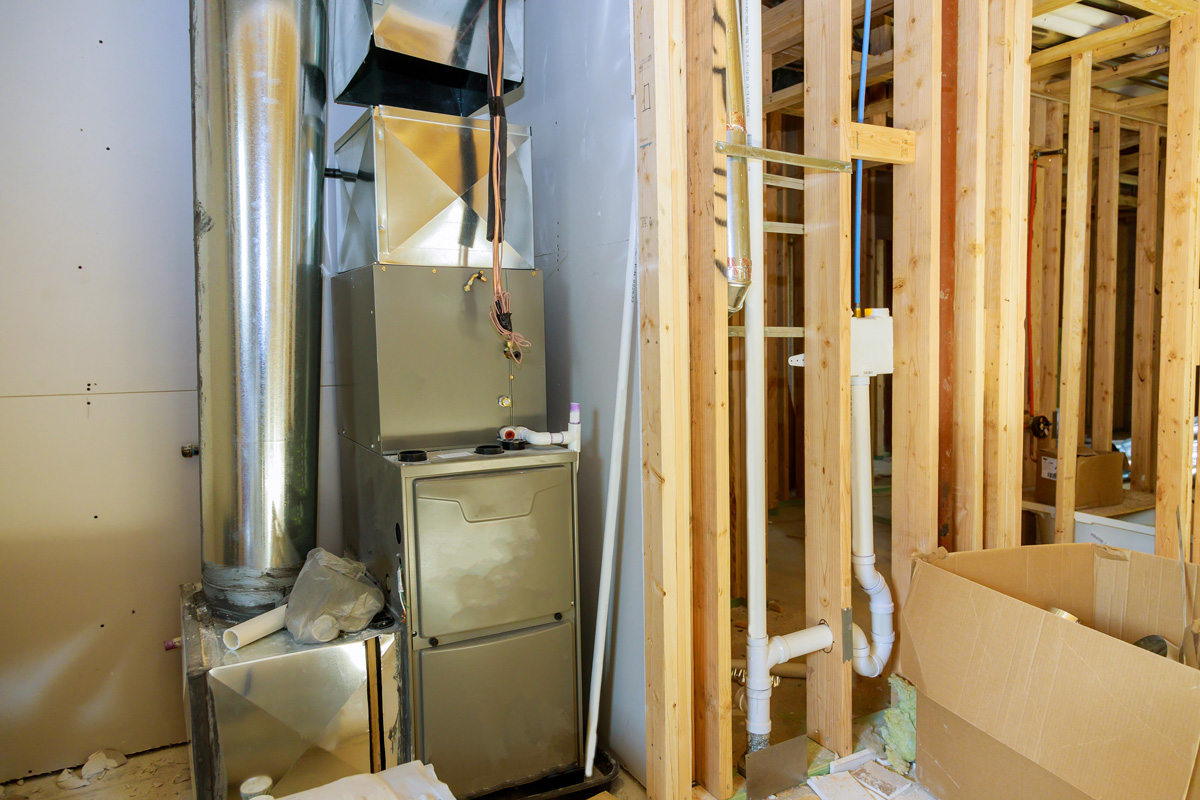
Whether you repair or replace a furnace comes down to four things: how old it is, what actually broke, how often it breaks, and whether it is still safe to run. Under 10 years with one worn part, an igniter or a flame sensor, you fix it. Past 15 years, a major part, or a cracked heat exchanger, you are usually done. The half-price rule is a fair starting point: if a repair costs more than half the price of a new furnace and the unit is already past 15, the money is better spent on the new one. But safety overrides the math every time. A cracked heat exchanger is a carbon monoxide problem, and it happens to also cost money.
Key Takeaways
- A small repair on a furnace under 10 or 12 years old is almost always the right call. Fix it, move on.
- Past 15 years, a major part or a pattern of breakdowns usually means replacement, not another patch.
- A cracked heat exchanger is a safety issue first. The money part is almost an afterthought.
- The federal furnace tax credit ended after 2025. Black Hills Energy still runs a 2026 rebate on high-efficiency furnaces, and it is real.
- Decide in October if you can. A furnace that quits in January does not let you compare options.
How do you decide whether to repair or replace a furnace?
Start with what the technician found, not the number on the paper. A $250 igniter and $250 chasing a short-cycle nobody can pin down are two completely different conversations, even with the same total.
Then you line up four things. Age. The part. The history. Safety.
Age first. Most gas furnaces run 15 to 20 years. ENERGY STAR says start looking at replacement once a furnace passes 15. The manufacture date is on the data plate inside the cabinet door. If you cannot read it, a technician will find it in two seconds.
The part matters more than most people realize. An igniter, a flame sensor, a pressure switch, a limit switch. Those are wear items. They are meant to go. A furnace that is eight years old and just needs a new igniter is not dying. It is 800 miles from dying. But the heat exchanger? Or a blower motor on a 17 year old unit that is failing the same way the inducer motor did two winters ago? That is not a part wearing out. That is the whole machine wearing out together, and the rest of it is just behind it.
History. A second or third call in the same winter is a pattern, and patterns are how you know you are not in a fix-it world anymore.
Safety. Carbon monoxide, a cracked heat exchanger, flame rollout. These skip the line. No math, no “let’s get through the winter.” You stop the furnace, you get it looked at, you move.
You will see two shortcuts online. The 50 percent rule. And the “$5,000 rule,” where you multiply age by repair cost and replace if it tops $5,000. Both are fine napkin math. Neither asks the question I care about most: is this the first part to wear out, or the fourth? On a 17 year old furnace, the inducer that just failed has company. The blower and the control board are the same age and ran the same winters. They are going to go, too, just not on your schedule.
Which furnace repairs are almost always worth doing?
A hot surface igniter cracks with age. A dirty flame sensor lets the burners light, then shuts them off three seconds later. A pressure or limit switch gives out. A control board dies after a power surge. A clogged filter starves the furnace of air until it trips on high temperature. These are normal. These are the parts that are supposed to wear.
None of them mean the furnace is done. If your furnace is eight years old and the bill is a few hundred dollars, I would not let anyone talk you into a new one. “It is still running, sort of” is a fair argument on that furnace. It is a weak argument on a 20 year old unit that has needed somebody in the basement for three straight winters. Those are not the same furnace, and the decision is not the same.
Does a cracked heat exchanger mean a new furnace?
The heat exchanger is the metal wall between the fire and the air your blower pushes through the house. Crack it, and combustion gases, including carbon monoxide, get into the air you breathe. A confirmed crack is a stop-running-it situation. Not a “let’s get through the winter” situation. A stop now situation.
Whether it means a whole new furnace depends on age. On an older unit, swapping the heat exchanger is a big, labor-heavy job, and it leaves every other old part in place. Replacement nearly always wins. On a newer unit, check the warranty first. Many new furnaces carry a 20 year warranty on the heat exchanger, and that can turn what looks like a $500 to $1,500 repair into mostly a labor bill. A lot of homeowners never ask, so they never find out.
Ask to see it. A real crack can usually be shown with an inspection camera or a photo, and a good technician will not mind. If they cannot, ask why. And do not wait for a crack to find a problem. The Consumer Product Safety Commission recommends a yearly professional inspection of fuel-burning heating systems and working CO alarms in the home. If a CO alarm goes off, get everyone outside first. Call 911 or your gas utility from there. Sort out the furnace after.
How old is too old for a furnace in Iowa?
Age alone does not kill a furnace. A well-kept 20 year old unit can run fine. What age does is chip away at reliability and efficiency, and efficiency is the part people underestimate because they cannot see it until the bill shows up.
AFUE is the share of fuel that actually becomes heat in your house. Older furnaces can run as low as 56 to 70 percent AFUE. Modern high-efficiency models reach 90 to 98.5 percent. An 80 percent furnace sends roughly one dollar of every five up the flue. A 70 percent furnace sends close to one in three. You are throwing it away, every winter, and you do not see it because it goes out a vent pipe and not through a meter you can watch.
By age, assuming some maintenance along the way:
- Under 10 years: repair it. Check the warranty first.
- 10 to 15 years: repair small things. Weigh big repairs against what a new furnace would cost, and do that math in October, not in January.
- 15 years and up: a major repair usually means it is time. Plan before it forces the decision.
Furnaces do not quit on a convenient day. They fail when they work hardest, which around here is the coldest stretch of winter. If yours is on borrowed time, replacing it in October on your schedule beats replacing it on a Sunday night at 15 below when the first available install is two weeks out.
What does a repair cost compared to a new furnace?
National averages are a starting point, not a quote. Angi’s 2026 data puts the average furnace repair at about $318, with most homeowners paying between $133 and $505. Igniters and flame sensors sit at the low end. Blower motors, inducer motors, and heat exchangers can top $1,000. Angi’s gas furnace cost guide puts a full replacement at about $3,800 to $10,000, with some high-efficiency models reaching $12,000. Those are national figures, not a Comfortec Heating, Cooling & Plumbing number.
What moves the price: furnace size, efficiency tier, venting or duct changes, how hard the furnace is to reach. A real number for your house takes someone looking at your setup, which is what a quote visit is for.
One thing I say every time because people do not hear it enough. The cheapest bid is rarely the cheapest job. A wrong-sized furnace, or one installed with sloppy venting and an undersized return, costs you more every winter than the few hundred dollars you saved on the bid. You pay for it for 15 years, not for one afternoon. A good install matters more than the brand on the box.
What changes when you go from an 80 percent to a 95 percent furnace?
More than the sticker. A high-efficiency furnace is a condensing furnace. It pulls so much heat from the exhaust that water condenses inside it. So it vents through plastic pipe, usually out a side wall, and needs a condensate drain routed where it will not freeze. If your old furnace shared a chimney with the water heater, the water heater may be left alone in a flue that is now too big for it. That can mean a liner or a different vent. A good installer checks that before quoting, not after.
You may have heard 80 percent furnaces are being banned. A federal rule requiring 95 percent AFUE on most new gas furnaces made after December 2028 has been sent back to a federal appeals court for another look, and the Department of Energy has proposed delaying it. Either way, it never required anyone to rip out a working furnace. If you are replacing anyway in a climate like ours, I would lean high efficiency in most houses. The fuel savings add up over 15 years, and the math is in your favor if you run the numbers.
If you are also weighing the air conditioner, read how to decide on AC repair versus replacement before you sign anything. When both are old, replacing them together often makes sense. The crew is in the house once. The ducts get looked at once. You save yourself a second install in the middle of summer.
Is there a tax credit or rebate for a new furnace in 2026?
The federal tax credit is gone. The IRS instructions for Form 5695 confirm the energy efficient home improvement credit does not apply to property placed in service after December 31, 2025. If a 2026 quote mentions it, ask about it.
Utility rebates are still around. If Black Hills Energy is your gas utility, as it is in Spirit Lake, its 2026 Iowa residential rebate program offers $350 on a furnace rated 96 percent AFUE or higher, plus up to $50 toward furnace maintenance once every three years. Funds are limited, paid first come, first served, and the application is due within 45 days of the invoice. Programs change, so confirm current terms with your gas utility before you count on the money. The rules shift, and a rebate you counted on can quietly disappear between when you got the quote and when you got the invoice.
What if the furnace heats a lake home nobody is in?
Then the math changes, and not in your favor.
Keep a place on West Okoboji, East Okoboji, or Spirit Lake heated all winter, and the furnace is all that stands between your pipes and a freeze. A furnace that is “still sort of running” in a house you live in is an inconvenience. In an empty house it is a burst pipe nobody finds for two weeks, and a flooded floor nobody sees until they get back. The “wait and see” that works in a house you check every day does not work in a house you check every three months.
For a lake home, I would replace sooner. Never skip the fall tune-up. Add a connected thermostat that texts you a low temperature alert. If you are still deciding whether to heat the place or drain it, our guide to closing a lake home for winter walks through both options, and Lake Home Service handles the whole thing if you would rather not.
How we help you make the call
Comfortec Heating, Cooling & Plumbing has worked on Iowa Great Lakes furnaces since 2004. We service any brand, carry a wide variety of parts, and install Carrier, Ruud, and Lennox heating and cooling equipment.
When your furnace acts up, our job is to tell you what is wrong, show you, and give you a straight answer on repair versus replace. If a small part fixes it, that is what you will hear. I am not going to talk you into a replacement because it makes us more money. That is not how this works. If you replace, we size the furnace to the house, not to the catalog. Our technicians use carpet masks, shoe covers, and drop cloths. Every new install includes first-year maintenance. The work carries our Lifetime written Workmanship Guarantee. Financing is available through Synchrony if that helps you get to a yes sooner than the next winter does.
Frequently Asked Questions
How long does a furnace last in Iowa?
Most gas furnaces last around 15 to 20 years. Regular maintenance pushes toward the long end. Skipped tune-ups, dirty filters, and an oversized furnace that short-cycles pull toward the short end. ENERGY STAR suggests planning for replacement once a furnace passes 15.
Is it worth fixing a 20 year old furnace?
Sometimes, if it buys you a few months to plan. A cheap part on a 20 year old furnace might get you through a season, and that is fine if it gives you time to get a quote in October. A major repair at 20 years is almost never the right call. It is past its expected life, well below modern efficiency, and the next failure is probably close behind. At that age, a repair is a delay, not a fix.
Should I replace my furnace before it breaks?
If it is past 15 and needing regular repairs, yes. Replacing on your schedule lets you compare options, check rebates, and pick your install day. Replacing after it quits usually means taking the first available furnace in the coldest week of the year, with no time to think about what you actually want.
Do I need new ductwork with a new furnace?
Usually not. Most replacements connect to the existing ducts. But a furnace only performs as well as the ducts let it, and a good installer checks return air and duct sizing and tells you if something there is holding the system back.
Still on the fence? Request a quote for a straight answer and a written number, or schedule a service call if your furnace is down now. Our 24-hour line is (888) 362-2106.